














|

Learning to Listen to Palestine:
Author Lani Lanchester’s
Quest for Peace
By Andrea Marvin
After facing challenges in her own life, author Lani Lanchester traveled to Israel to heal. Little did she know that her visit would be the start of a personal quest to tell the truth about the Israeli–Palestinian conflict.
Her curiosity to understand a complex issue led her to listen to the stories of Palestinians. The narrative she heard was quite different from the one she read about in the headlines.
It changed everything she thought she ever knew. Now, she wants to share what she learned with the world.
The book, “Learning to Listen to Palestine,” humanizes the Palestinian people. It brings a sense of clarity and understanding.
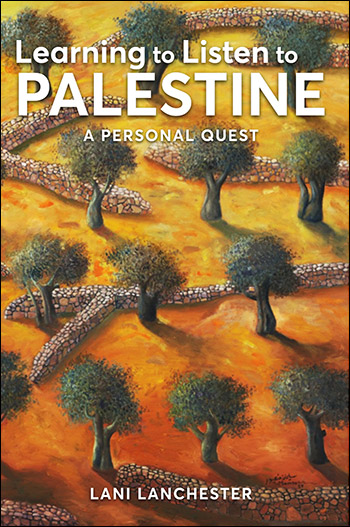
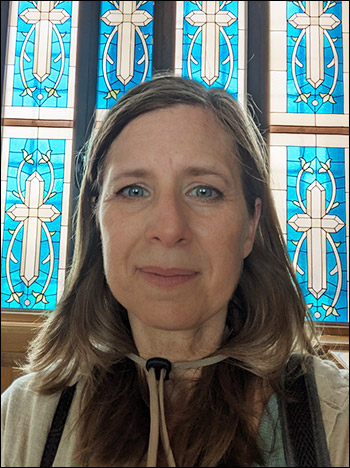
A conversation with author Lani Lanchester shows how she profoundly believes in the healing powers of listening. She feels everyone’s voice and story matters and hopes her book will start a peace movement.
It’s nice to speak with you, Lani. Tell us a little bit about your new book. What’s it about?
The book is called “Learning to Listen to Palestine,” and it’s a personal quest. I was unaware of the Palestinian people until recently. I thought I knew everything about Israel and Palestine until I went there and met the people.
I was shocked to learn that I knew nothing. As my world was shaken by how much I didn’t know, I learned to apply my listening skills.
After hearing their stories, I researched to understand more and find out what was true and exaggerated. When I investigated the truth, I found things to be very understated.
Did you travel to Israel to write this book, or did you feel called to do so when you returned home?
No, I went there because I had a personal crisis, and I was looking for a beach to cry on and somewhere I could be alone.
I had planned to visit Hawaii. A friend asked why I would go there to be miserable. He encouraged me to come to Israel and walk in the steps of Jesus. He pointed out that Israel had a beach, too. So, that’s what I did.
On that trip, I met Palestinian people from around the country and wrote things down. I was shocked at how much I didn’t know.
A short time later, I traveled to Jordan. Again, things were different from how I thought they were. It was such a beautiful place with beautiful people.
It wasn’t until October 14th that I realized I needed to write a book. That was the day my boss died, and my dad passed away on the same day.
Then, I heard a radio broadcast talking about the carpet bombing of Gaza. My heart was broken. That’s when I started writing.
How did you come up with the title of the book?
Before I went, my dad was worried about me going alone. As an American, I didn’t think there would be any real problems.
I ended up doing a Google search on the Israeli-Palestinian conflict and Americans. Shireen Abu Akleh’s name came up.
She was a Palestinian Christian reporter who gained citizenship in the United States. She returned to Israel and Palestine to cover the conflict.
While there, she was targeted by an Israeli Defense Force (IDF) sniper and killed while walking down the street with her press badge on. I was shocked.
After reading that, I prayed and asked God if I should go. I heard him tell me that I should go to listen, and so that’s what was in the back of my head.
So, when I traveled to Israel and Palestine and heard stories that I didn’t understand, rather than getting argumentative or trying to express my own thoughts or understanding of situations, I just listened.
Palestinians would pull up a chair, pour me tea, and tell me stories.
What’s the underlying message in the story?
I didn’t fully understand what the book was about until after my dad died. My sister handed me a book because I was suffering, about Desmond Tutu in South Africa. It’s called, “The Book of Forgiving.”
He taught that if we listen to people’s stories, it’s the first step in healing. Before reading it, I didn’t know that South Africa went through this season of healing when apartheid fell. People would be guided into forgiveness after telling their stories.
Listening to people is the first step toward healing. And you must listen to people to love them. And one of the biggest problems that I see in Palestine, as I studied it and looked closer, is how dehumanized these people are.
Often, situations are so easily derailed by words like Hamas. Hamas is 1% of the population. What’s happening there is not possible without the dehumanizing of these people.
So, when you hear the stories in my book, you will realize they are our brothers and sisters. They are more like us than we ever imagined.
Did you face any challenges writing a book about conflict?
When I with my Palestinian friend who invited me to Israel, we were going up this winding road, and he pointed out Jordan Valley. And I’m just in awe. I naively told him, “There must have been something righteous about 1948.”
At this point, I had never heard of the term “Nakba” before. (Nakba means “catastrophe” in Arabic.)
I had never heard this before and was sitting there in shock. And I remember God told me to listen, so I asked my friend to tell me more about this.
He was angry and couldn’t talk about it. It was a very confusing moment for him and me. He felt very alone in our friendship because I didn’t know something I should have known.
Afterward, I did a year of research to understand this. And it was very difficult to find information. It’s not readily available. It wasn’t until I found Ilan Pappe. He is an Israeli and served in the IDF during the 1973 War.
He’s a historian and a professor. He published a book called, “The Ethnic Cleansing of Palestine.” In it, he gives details of what happened. It was devastating.
I finally understood what happened because of the way it was pieced together. Ilan Pappe took every incident from as many angles as possible, from eyewitness accounts to journals and military orders. It’s an amazing book.
Is there a particular audience you hope the book reaches?
I'm a Generation X woman who was always told to sit down and shut up. That my voice doesn't matter. But I have been raising students to let them know their voice matters. So, I felt I was stealing from my community if I didn't publish this.
If there's a group I relate to most, it's people like me - those who need to know their voice matters and encourage them to stand up and speak the truth. We can make the world a better place each day by listening to people, hearing their stories, and starting them on the road to healing.
This is a way to humanize the Palestinian people. Once we do this, we will have the groundwork for peace. And really, I do hope that we have a peace movement.
How has your time as a schoolteacher influenced the book?
One of the things that I tell my students is that hearing everyone's story is so important.
I teach biology. In biology, there's only one race, the human race. But sometimes things happen.
I am a white woman, and there are some students in my classroom who have been mistreated by a person who looks like me, so they don't trust me. And you cannot teach somebody who does not trust you.
So sometimes there have been problems in the classroom where I've had to say to a student, "In the hall." Students hate being sent to the hall because this is where bad things have happened before. This is where they’re dehumanized, where they're belittled. But that is not what I do.
Instead, I tell them to lean against the wall. I lean against the wall beside them and ask them to stare across the way, and I do the same until I am calm. Then I'll turn to them and tell them I love them, and there's no reason I should be in this job if I didn't.
They're shocked at this point and willing to listen to me. So, I tell them we are not working well together and that we need to be on the same side to do that. I explain that I'm on their side.
At this point, I must be willing to listen to the student's story. Sometimes, there's someone who has mistreated them in the past who looks like me.
Hearing their story is the first step in love and peace. And once we do this, we can do anything together for the rest of the year. I know this is the same story as Israel and Palestine. We must listen genuinely to each other's stories and start on the road to peace.
Why do you think it’s important for people to question the narratives of the world?
What’s been happening in Israel for the past 75 years has not been working. The focus of propaganda is to dehumanize one group. If you dehumanize one group, you can do anything to them.
Anything else you want to say?
I wrote the book because there is hope. If there had not been hope, I would not have written it. Another important book people should read is Desmond Tutu's, “The Book of Forgiving.”
Further, I think that everyone should try to meet a Palestinian. There are so many of them in our communities. You can meet them at a local library or worship center or even on Facebook or Instagram.
I met a Palestinian friend on Instagram because I needed a soup recipe. I was going to bring soup to my church on Super Bowl Sunday, and I wanted it to be a Palestinian soup.
He gave me his mom's favorite recipe and, afterward, said his mom wanted me to visit them in Lebanon.
“Learning to Listen to Palestine” emphasizes the importance of listening and understanding different perspectives.
Author Lani Lanchester encourages readers to consider a different point of view, stating that it takes courage to be wrong.
Her book “Learning to Listen to Palestine” is available on Amazon and Barnes & Noble.
She hopes her work turns into something much more and is a progressive step toward world peace.
Home |
Actors/Models |
Art |
Books |
Dining
Film & Video |
Food & Wine |
Health & Fitness
MediaWatch |
Money and Business |
Music |
Profiles
Professional Services |
Sports |
Style & Fashion
Technology |
Theatre |
Travel & Leisure
Copyright 1995 - 2026 inmag.com
inmag.com (on line) and in Magazine (in print)
are published by in! communications, Inc.
www.inmag.com
|


Advertiser Info
Subscription Form
Contact Us
|

