














|

Hope Personified:
Interview with Dr. Shelley McIntosh
By Carin Chea
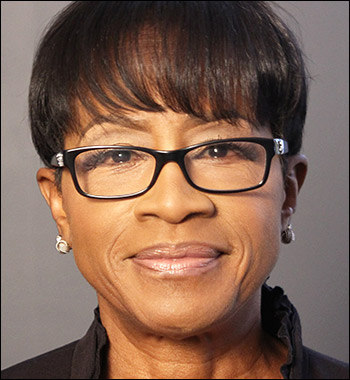
Author and prominent educator, Dr. Shelley McIntosh, is perhaps the best example of hope personified.
The author (who has also been a teacher, professor, school principal and national youth director) has helped change the destinies of the communities around with her tireless dedication.
Dr. McIntosh’s life’s work has proven that it truly does (as the saying goes) “take a village.” And, who amongst us can not relate to that, especially during this particular time where things can best be described as complicated and tenuous?
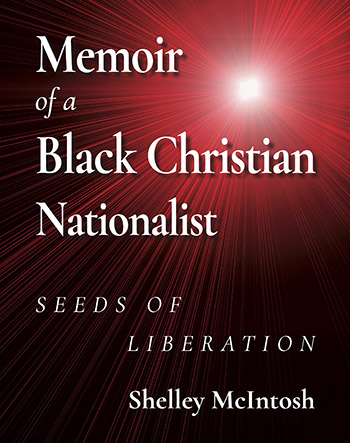
Dr. McIntosh’s most recent book, Memoir of a Black Christian Nationalist: Seeds of Liberation, comes at a pivotal time in global history where is it undeniable that people need people in order to thrive and hold onto some sense of sanity.
The author’s Memoir offers a much-needed guiding light to a world desperately trying to swim its way out of dark, murky uncertainty.
You have a very impressive body of work and extensive credentials. Tell us about your background.
I’m an educator at heart. Education chose me. I’ve been an elementary school teacher, as well as a principal. I was an assistant professor at the University of Houston Downtown educating those who were also aspiring to be teachers.
I was also a national youth director for 21 years during which I created a program that addressed our children academically, socially, spiritually, and physically.
Our goal was to nurture our children to their full capacity. We provided programs for our children and took care of them 24/7 - whatever it took for a child to feel safe and secure. And it was at little to no cost because we volunteered.
Our passion was to develop children to be better than we are. The human connection is basic.
In Memoir of a Black Christian Nationalist: Seeds of Liberation, I talk about that human connection.
We are all connected no matter the race, creed, or religion. We breathe the same air; we drink the same water. Our energy fields are connected. We live in a disillusioned world where we think we’re not, but we are. People need people.
What inspired you to become an educator in the first place?
I always put myself in context. My father was a Baptist pastor who had me teaching kindergarteners when I was 12 years old. Back then, I was teaching because my father told me to.
Later on in life, I was affiliated with the Shrines of the Black Madonna of the Pan African Orthodox Christian Church. The Shrines of the Black Madonna got their name based on historical documents and the latest DNA research that indicates the mother of Jesus was Black.
I consider all of these experiences to be my movement into education. Again, education chose me. I didn’t start out to be an educator, but my path and journey always led me that way. I’ve studied quite a bit. I know quite a lot. I’m not saying I know everything, but I know a great deal.
In my studies and research, what happened was that the early Roman Empire adopted Christianity, but they couldn’t adopt a black Jesus in their counsels. So, they would meet and determine what kind of image or theology would go with this white Jesus that they created.
The Roman Empire made Jesus into what they wanted to. For African Americans who were enslaved, we didn’t have a black savior to deliver us. The same people who would oppress us are now our savior. It was a very intentional psychological tool to maintain slavery.
Being a member of The Shrines of the Black Madonna opened my eyes to that. This history needs to be known. Personally, I would like to reclaim Jesus for who he really is. I’m not the only one saying this. Scholars have discovered this through DNA research as well.
Tell us about your latest work, Memoir of a Black Christian Nationalist: Seeds of Liberation.
I wrote this book last year and published it this year. I was doing a great deal of reflecting during the pandemic. I reflected on my life and why I dedicated 30 years of my life to becoming a Black Christian nationalist.
I began to understand the world I lived in on a higher level. I wanted to commit myself to help not only change the lives of African American people but to build a better world.
We don’t see the hands of the farmer who planted the seeds, we don’t see the work of immigrants to harvest the food, nor do we see the truck drivers who bring the food to Kroger’s. But we do see the food there. This is a totally interdependent world.
But, often, what we see through the media is total individualism. The glory goes to “me.” But we depend on people we’ve never seen (and never know) to live. This concept of communalism fits into the concept that it takes a village.
I wrote this in 2020 and I reflected on my life and what we had done as a group of people. We [members of The Shrine of the Black Madonna] did some great things. We lived in communities free of crime, drugs, and debt. There was safety.
Communalism is not communist or socialist. Communalism is the highest nature of man, where a man uses his God-given will to help and share with others. I want people to know that this has been done. This is being done. And it can serve as a foundation for other communities that can do the same thing. There doesn’t have to be poverty and homelessness.
I include this prototype in my book, and I also delineate what a great leader is. I would love for others to hear my story as it is interwoven in the doctrines and teachings of the church. I want others to know what it takes to mold people to commit themselves to building institutions that take care of people.
My ups and down, my victories, my failures, my emotional state, and how (along that journey) I committed myself to build a more stable and secure world.
I think about leadership and how we elect people to office. When they get into office, many of them forget they’re serving the people. I see this across the world.
Somewhere, people have not been put at the forefront. Because of that, we live in a world where children shoot up people. Where the government makes the majority of the decisions of where money should go leaving schools in the inner city underfunded. Where there are men and women who go hungry. And that bothers me.
Even though I’m living well right now, on the other side of the coin, there are people who are not.
What do you hope your students and clients learn from you?
By the time I was 18, I had experienced the assassinations of John F. Kennedy, Robert Kennedy, Reverend Martin L. King, Jr., and Malcolm X.
I also saw the civil rights movement being televised, but I didn’t know why. Why were these things happening?
When I was 21, my sister had gone shopping at the Shrines of the Black Madonna Bookstore and Cultural Center, and she brought back the book The Black Messiah. I was immediately interested. I read it in 3 days and after that, we went to that church. I joined The Shrine on that day.
Now my eyes were being opened and I was being educated. A disciplined study was required. Upon joining, you had a list of 25 books that were required for reading.
If we, as a church institution, could spin off other institutions that are essential to the black community, then other communities could do that as well. We no longer had to be disadvantaged, powerless, mis-educated.
We purchased the property, and they were remodeled into nurseries, youth centers, meditation centers, training centers, and residence halls. We created a better life for ourselves and for our children. We took the responsibility of building for ourselves to heart.
I want people to know that me being a Black Christian Nationalist, along with others, made these things happen and that these things can be a prototype for other communities.
What does the ideal educational system look like in your eyes?
It is about addressing the whole child. This little human being should be looked at spiritually, physically, and academically.
I love the self-determination theory. There are three elements to this: Autonomy, relating to others, and being competent.
When children do not feel competent, I see them withdraw. I see them become deviant. The ideal system would look like one that is nurturing those three needs.
In the educational system, the bureaucracy often limits what a principal can do and also places a heavy burden on teachers. But our teachers also have those 3 three psychological needs. Their voices need to be heard when they are teaching.
So, instead of a top-heavy type of organization, it has been one where there is more collaboration. We’d create programs and behavior for our children to meet those needs.
For example: To add to the need for relatedness, I’d incorporate it (with the input of my teachers) a morning meeting. I’d tell teachers to have a morning meeting, for just 5 to 7 minutes, with the children. This will build a relationship with the children and with each other.
I guaranteed them that within several months, those children would be self-governing. And it came true.
I mention this in my books, A Principal’s Tale, Life in 31 Days, and the second book, A Principal’s Tale, A Self-Determined Leader.
If they were to make a biopic on you, who would portray you through the different stages of your life?
The young poet who read at the inauguration. What’s her name?
I know who you’re talking about. Let me look that up. It’s Amanda Gorman.
Yes. Amanda Gorman. I was so impressed by her self-awareness and her awareness of the world.
You can find Dr. McIntosh’s books on Amazon, Barnes and Noble, DetroitBookCity.com, and Target.
To keep up to date on any upcoming and future projects, please visit www.ShelleyMcIntosh.com.
Home |
Actors/Models |
Art |
Books |
Dining
Film & Video |
Food & Wine |
Health & Fitness
MediaWatch |
Money and Business |
Music |
Profiles
Professional Services |
Sports |
Style & Fashion
Technology |
Theatre |
Travel & Leisure
Copyright 1995 - 2026 inmag.com
inmag.com (on line) and in Magazine (in print)
are published by in! communications, Inc.
www.inmag.com
|


Advertiser Info
Subscription Form
Contact Us
|

