














|

The Family Whisperer:
Interview With Meri Wallace
By Carin Chea
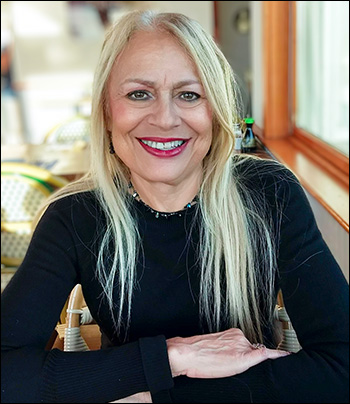
Meri Wallace is the playground friend every child wishes they had and the trusted confidant every parent needs.
A prolific and esteemed writer, her third book, The Secret World of Children, is a necessity for adults seeking to understand the psychology behind problematic or challenging behavior in kids.

A frequent contributor to various news outlets and magazines, Wallace is lauded as a parenting expert. She is also an LCSW (Licensed Clinical Social Worker) by training, and a practicing child and family therapist for over three decades.
Wallace has become an indispensable pillar in the mental health community, and it’s not hard to see why.
At the end of our time together, not only did I feel an overwhelming sense of peace and wholeness, but the inner child within me was smiling, and carefree, once again.
In college and grad school, Psychology Today was one of my favorite magazines because everything in it was fascinating. It’s such an honor to speak to a regular contributor to the magazine.
Thank you. What I loved about doing that for years is taking a topic and, from my own experience in working with my own clientele, I could write about anything.
I even wrote about topics such as the kids at the border and how separation affected them.
What made you pursue social work as a profession?
Initially, I majored in dance. I’ve always loved children, and felt they needed to be treated with care. I saw that a lot of mistakes were being made by parents and teachers, and that people didn’t understand children.
As a result, they didn’t treat them as well as they needed to be. To connect the two paths, though:
I started teaching creative movement to children of every age so they could express themselves through movement. I loved them so much that I decided to study child development and then specialize in teaching parents how to treat their children to grow up feeling loved.
I went to NYU Social Work School and I knew that was the direction I would pursue. I opened a center in Brooklyn Heights called The Heights Center for Adult and Child Development.
I had parenting groups, new mother groups, “Mommy and me” classes and I did counseling as well.
And then, I started writing for magazines, beginning with Brooklyn Parenting Magazine.
I also worked at nursery schools as a consultant. I’d walk into the classes and I’d really study the children: How do they handle their anger at this age? What’s their fine motor control like at this age?
I helped the parents, and teachers to deal effectively with any problems they faced with a child.
It was then that I got the opportunity to write a book for Barron’s Publications. They asked me to write a book on the four-year-old, which was a major learning experience for me.
At that time, they had a whole book series: Keys to Parenting Your Two-Year-Old, Keys to Parenting your Three-Year-Old. I was asked to write the four-year-old book in that series.
I became a columnist for Sesame Street Parents magazine and I had a fabulous experience there. I wrote a column on how to deal with tough topics with your child.
At the same time, I had discovered in my practice that birth order had a huge impact upon people and that there were trends to the experiences that a first born, middle, youngest, etc. had.
I wanted to write a book about birth order and how parents could work with each of their children so they could help them to grow up feeling equally loved.
Birth Order Blues addresses the challenges of each birth order position and raises parents’ awareness of the reasons for their behavior. I also addressed the parents’ birth order and how that affects raising children.
I think that’s very important. Change starts with understanding yourself and others. I think you do such wonderful, meaningful work.
I had a ball! I was all over the country on talk shows and people really loved that topic.
Then I started writing for theatre. When I was a little girl, I used to write plays. My husband took a course in playwriting and I remembered how much I loved it. I was writing full length plays. I had a ball, writing and producing.
Then, I got to Tango Fever, which was my triumph because it was an Off-Broadway dance play. Nothing seemed as romantic to me as tango.
I did that for many years and left the world of parenting for a bit, though I continued writing a blog for Psychology Today.
Tell us about your newest book The Secret World of Children. That’s a super clever and catchy title, by the way.
It’s a title I came up with because, in working with parents for over 35 years, I identified one of the hardest things for parents to do: Understand their children’s behavior.
Kids would bite, kick, steal candy, clunk the new baby on the head. When parents saw this, they’d be horrified and say, “I have a bad kid.” And then, they wouldn’t know what to say and do in these situations.
It’d result in either punishing kids or just having unnecessary parent-child fights. The parents felt miserable and the kids ended up feeling unloved.
The reason I came to the idea of this “secret” was: “Here’s the secret to what’s causing all this behavior that is scaring you. You can calm down.” I connected their behavior to the normal development of children.
It all comes from there, and it follows children all the way from infancy to adolescence. I came up with 9 specific developmental issues that contribute to most of the behaviors we see.
For instance, little babies show their emotions physically. They kick their feet, they cry. They don’t have words or a way of communicating with you. Your 3-year-old (who’s not so far from being a baby) may kick you because he’s expressing himself physically.
Little children are also curious. They will explore all the exciting things around them. This continues all the way up to the teen years, and we see that kids are fascinated by all the new things around them – alcohol, drugs – it’s all new to their world.
It’s not that the child is bad necessarily, but in general, they’re curious.
I call my book a Life Vest in a Sea of Parental Confusion, and its main message is: “This behavior comes from normal child development.” I talk a lot about how children need to develop and grow.
In my book, I explain how these 9 issues show up in your child’s behavior, and there are positive ways to educate children about what they need to do in life.
Make believe that these are children have arrived on the Starship Enterprise in a new land and they don’t know what to do. They don’t know how to say hello or goodbye or how to eat. They don’t know how to function well in this world.
A large part of the book tells parents how to respond positively to their child’s behavior.
Let’s say you’re in a store, shopping, and your child wants a toy and is screaming at the checkout counter. You know you just bought him something in the prior store you visited.
Parents panic over that scenario, thinking, “He’s spoiled and selfish. I have to teach him that he can’t want everything he sees.”
I teach parents that it’s okay to want. Wanting is a good thing in life. Wanting makes you take the MCAT.
[uncontrollable laughter] I wish my parents had that insight when I was little. They would’ve LOVED for me to take the MCAT.
I am very sharp at giving parents positive words to use. Don’t make a child feel bad for a wish, but present them with the reality.
You have to tell them they can’t buy everything. Maybe make a wish list on the phone. Or play store and show your child how money works.
Parents need to be benign mentors. They have to teach the child how to navigate through situations. Always acknowledge the child’s desires, but also set appropriate limits.
The role of the parents is to teach and protect. Number one is to protect the child’s self-esteem.
I can’t stand how children are being treated, being hit and called bad names. Children are gems. But, parents don’t have the understanding of where their behavior is coming from and positive alternative tools to use.
I believe the main problem we have in our world, is that children aren’t raised to feel loved. I’m not saying parents aren’t trying; they’re trying their darndest! But, they need the information and resources.
I feel that with the information in my book we can fix the world one child at a time.
What’s the overall message you want to convey in your latest book?
Understanding yourself and having the right tools is going to help you raise your child so that they feel loved. And, raising children to be loved will help them love themselves and treat others well.
Being a parent+ is the hardest job in the world, and they have the best intentions, but you need more than good intentions. You need the tools.
I also feel my book is really important for doctors and teachers. I think doctors don’t necessarily understand child development They often give advice to parents on what to do in response to a behavior and they don’t know why the child is behaving this way.
In my book, I added some interesting things. I have a part where I say, “Okay, part of parenting is understanding who you were as a child and your own experiences.
Ask these questions of yourself. Why am I reacting this way? Maybe I am afraid to let my child buy a toy because I was spoiled or I was denied when I was younger.”
In any case, in each of the 9 categories of developmental issues, I talk about the importance of doing it this way, otherwise, this can happen.
A lot of my book is: What do you say when ____ happens. It’s important to note that I also write about when to seek pro help.
What are your thoughts on recent current events surrounding our young demographic?
It’s horrible, the fear in school. This goes back to something I discuss in my book: Kids grow up at home. Then they go to school; it’s the first place they’re facing the outside world.
Whatever goes wrong at home immediately shows up at school. Trust me. I worked in nursery schools for 20 years. If you have a skilled school where they know how to help children: Great. But, often, kids are not dealt with well if they have a problem, especially in elementary schools.
The teachers often deride the kids. The schools are so busy with funding and whatnot that they’re not focused on the whole child. That’s my feeling about it. It’s something I write about on my blog: How to help cut down on school violence.
If you could go back and say one thing to yourself as a child, what age would you go back to and what would you say?
I would say to me, as a baby: “You are wonderful. You are perfect. Your parents have some problems, and it’s not you. They shouldn’t be talking to you this way. It’s their problem.”
One of the things adults struggle with is that it’s hard for them to put the blame off of themselves and say, “No, I’m not horrible. I’m not all those horrible things that were said to me. I’m good. They made mistakes.”
People need to know that at a younger age. I don’t mean to trash parents because that doesn’t help anybody. Kids need to love their parents because they rely on them. But, they need to understand that their parents made mistakes and could’ve handled things differently without hurting their feelings.
Children buy that stuff. They take it in and see it as reality. If my mother says, “You have ugly hair,” then I have ugly hair.
If someone had explained to me early one: “They’re making mistakes with you. They should’ve been so happy to have you. You are wonderful.”
For more information, please visit MeriWallace.com.
Home |
Actors/Models |
Art |
Books |
Dining
Film & Video |
Food & Wine |
Health & Fitness
MediaWatch |
Money and Business |
Music |
Profiles
Professional Services |
Sports |
Style & Fashion
Technology |
Theatre |
Travel & Leisure
Copyright 1995 - 2026 inmag.com
inmag.com (on line) and in Magazine (in print)
are published by in! communications, Inc.
www.inmag.com
|


Advertiser Info
Subscription Form
Contact Us
|

