














|

When Justice is Clouded by Politics:
Interview with Dr. Joseph Russomanno
By Carin Chea
“On the surface, decisions involving abortion, guns, and clean air might seem topically disconnected.”
So reads a pivotal sentence in the Foreword of Dr. Joseph Russomanno’s book, The "Stench" of Politics: Polarization and Worldview on the Supreme Court.
To say that we currently exist in political climate fraught with confusion and despair is a gross understatement. In a time when women lack autonomy over their own bodies and when gun control requires strict re-examination, Dr. Russomanno’s book is a much-needed text for civilians and lawmakers alike.
The author addresses the inherent flaws in the Supreme Court justice system that have left our nation reeling with powerlessness and a tangible disconnect from the legal system meant to protect us.
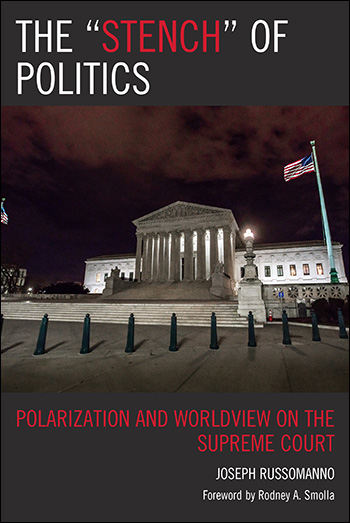
You have a background in broadcast journalism. What made you pursue your Ph.D. and your subsequent career as a professor at Arizona State University?
I had always known that someday I wanted to return to the college campus in a teaching capacity. The opportunity presented itself to pursue my doctorate, and after that, I accepted a full-time faculty position. More than 30 years later, here I am.
As journalists, we like to discover and share information. In a faculty position, that’s what we do as well, whether as a teacher or researcher who digs up facts, draws conclusions, and shares them.
Was there a particular event or moment that compelled you to write your book The “Stench” of Politics: Polarization and Worldview on the Supreme Court?
Some of my previous work was related to tribalism and polarization and specifically, some of the inter-relationships between those and First Amendment values like free speech and free press.
With this project, I was looking to expand on those, and I was looking in a broader scope. I settled on the nationwide affliction that we have with polarization and tribalism. It was such a broad topic that I could spend a lifetime writing about them.
So, as I was researching in that area, there was one particular source, a book, that sparked something. It included an analysis of this concept of “worldview.” It resonated with me and struck a chord. What I began to think of was: How could it be applied in ways beyond what was being laid out in this book?
As a longtime student of the Supreme Court, it came to mind. I began hypothesizing that this concept of worldview could be applied to the Supreme Court, how its people work, and how the justices approach their work. I put that into practice and it unfolded far better than I could’ve imagined.
What is a “Worldview?”
Worldview is something that each of us has. Perhaps one way to look at it: It’s a lens through which each of us views the world. It affects how we perceive the world and what we believe. It affects who we are and what we do. There are two primary categories of worldview: fixed and fluid.
There are certain traits and characteristics that each of us have. Worldview comes about through both our environment (particularly in our formative years) as well as genetics. There’s a physiological component as well.
Worldview affects everything that we do. Certainly on one level, our political and ideological beliefs, but even things in our day-to-day lives, like what restaurants we frequent, what beer or coffee brands we drink, which cars we drive. All of that is affected by worldview.
What I did with this book is to take this concept of worldview and apply it to the Supreme Court, to its individual justices, and some of the case topics that they have dealt with as this last term was coming to a close.
There were a handful of very important, very impactful cases that they ruled on having to do with reproductive rights, voting rights, gun possession rights, and religious rights. I focused ultimately on those four cases. All four of them were 6-to-3 rulings, all with the same 6 justices on one side. They very much fell into their worldview categories.
When you read their opinions, which I dissect in the book, they very clearly reveal who they are and where they’re coming from. It’s equally clear how the justices’ worldviews drive their opinions.
The supermajority of the six on our current Supreme Court are members of the fixed worldview and they also adopt a method of constitutional interpretation called Originalism, which means they take the text of the Constitution literally.
Originalism states that the Constitution is to be interpreted as the founding fathers intended it, which doesn’t allow us to apply the Constitution with flexibility in regards to contemporary society.
So, they take a document that’s more than 200 years old and apply it to the 21st century. It’s a very fundamentalist approach.
It’s my conclusion that the U.S. Supreme Court is no longer an institution where justice is the primary goal. Instead, it has become a political institution designed to attain political goals.
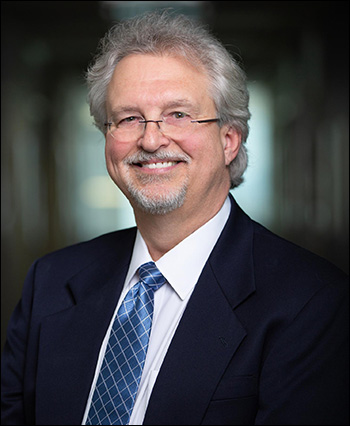
What does a healthy, ideal Supreme Court look like to you?
For me, it starts with the nomination process of the justices. If you look at it, it is operated by politicians. The hearings occur in a political body, and it is replete with political theatre. Is it any wonder the Supreme Court has become a political institution?
If you look at how some of the justices have been nominated, how they’ve been selected, it’s not how good of a jurist they are. Instead, it is dependent on their ideological views, their worldview. These justices wouldn’t be nominated if they don’t ensure that outcomes happen in a particular way on the bench.
There’s a revolution underway in this country and it’s being led by the Supreme Court. That revolution is taking rights away from a lot of Americans, the very same rights that same institution granted.
The Dobbs [versus Jackson Women’s Health Organization] abortion case overturned a precedent that was here for over 50 years. It’s no coincidence that that revolution began about 50 years ago.
In the immediate aftermath of Roe v. Wade, they determined: “This cannot stand. We need to change the law to change the country.
What’s the best way to change the law? We can go through Congress, but that takes too long and it’s too difficult. Let’s go through the Supreme Court where you only need 5 votes to win.”
They played the long game, got the type of people they wanted on the Supreme Court, and bit-by-bit they’re changing the law.
If you were given 5 minutes to speak to the Supreme Court justices, what would you say?
Frankly, I think 6 of them are a lost cause, so I wouldn’t waste my time with them. Their fixed worldviews are hardwired.
The efforts need to start with people before they get to the Supreme Court, and specifically, with the people who are selecting the nominees for the Court, and for the people who vote on the nominees, U.S. Senators.
One of my major themes in the book is that the Court is a political body. If we were to distill the problem to its most basic form, that is it. If that is the primary problem, then we need to de-politicize it to help remedy the problem.
In the book, I have a few recommendations, which are designed to de-politicize the Supreme Court. There’s no magic wand, but my hope is that it would help.
What are some of those ideas to de-politicize?
The Constitution requires that the justices are nominated by the president. We can’t change that. What we can do is, rather than having one list of names that get to the president from which he chooses, we should instead have a bi-partisan committee formed whose job it is to produce that list of names.
Even though the president isn’t required to choose from that list, ultimately there may be political pressure on the president to choose from that list.
There is some degree of precedent for that. President Biden formed a bi-partisan committee on the Supreme Court during his first year in office. It also doesn’t have to be restricted to Supreme Court nominees, but could also extend to all federal court judgeships.
My hope is to de-politicize the Court by getting a better cross-section of jurists. If we de-politicize the process and nominees themselves, it would result in a better opportunity for rulings that are not as political as they have been.
I’m the first to acknowledge that we’re going to get decisions that don’t please all people all the time. But, we would like to be able to read the rulings and the opinions and say, “I may not agree with this completely, but at least it makes sense. It’s solid reasoning.” We don’t need to go back to the 13th century to support our arguments.
Would you like to know how I got the title of the book?
Does it have anything to do with the 13th century?
No. The word “Stench” in my title is inspired by Justice Sonia Sotomayor, who is not one of the lost causes on the current bench.
When the Dobbs abortion case that the court ruled on last year was in oral arguments stage, she was questioning one of the attorneys, and in the process, asked, “Will this institution survive the stench that this creates in the public perception that the constitution and its reading are just political acts?”
As soon as I learned of what she had said, it was a spark for me. It speaks so well and so directly to the point I’m trying to make with this book.
She’s asking the question: How is the public going to view us? Is the public going to see us as doing anything other than political?
Over the last year, there has been a continual plummet in the view and the ratings of the Supreme Court.
Americans feel the court’s actions and rulings are driven by politics and aren’t judicially objective in how they approach these cases.
For more information on Dr. Russomanno’s book, please visit amazon.com/Stench-Politics-Polarization-Worldview
Home |
Actors/Models |
Art |
Books |
Dining
Film & Video |
Food & Wine |
Health & Fitness
MediaWatch |
Money and Business |
Music |
Profiles
Professional Services |
Sports |
Style & Fashion
Technology |
Theatre |
Travel & Leisure
Copyright 1995 - 2026 inmag.com
inmag.com (on line) and in Magazine (in print)
are published by in! communications, Inc.
www.inmag.com
|


Advertiser Info
Subscription Form
Contact Us
|

